Opening Pharaoh Archives...
Nefertiti
"The Beautiful One Has Come"
r. 1353 BCE – 1336 BCE|17 Years
Throne Name (Prenomen)Neferneferuaten
Scroll
ROYAL LIFE CHRONICLE
The Narrative Account
Her name meant "The Beautiful One Has Come," but she was far more than an aesthetic adornment to the court. As the chief consort of Akhenaten, she ruled alongside him as an equal partner in the great religious revolution. She stood beside him on the palace balcony, presenting gold collars to the elite and offering directly to the Aten sun disc.
Her artists portrayed her in positions of power usually reserved for kings. Reliefs on the temple blocks show her riding her own chariot and striking down foreign captives, carrying the full authority of the crown.
Following her husband's death, some scholars believe she assumed the male title of pharaoh, ruling under the name Smenkhkare or Neferneferuaten. She fought a desperate, final battle to preserve the revolution before the old court asserted itself.
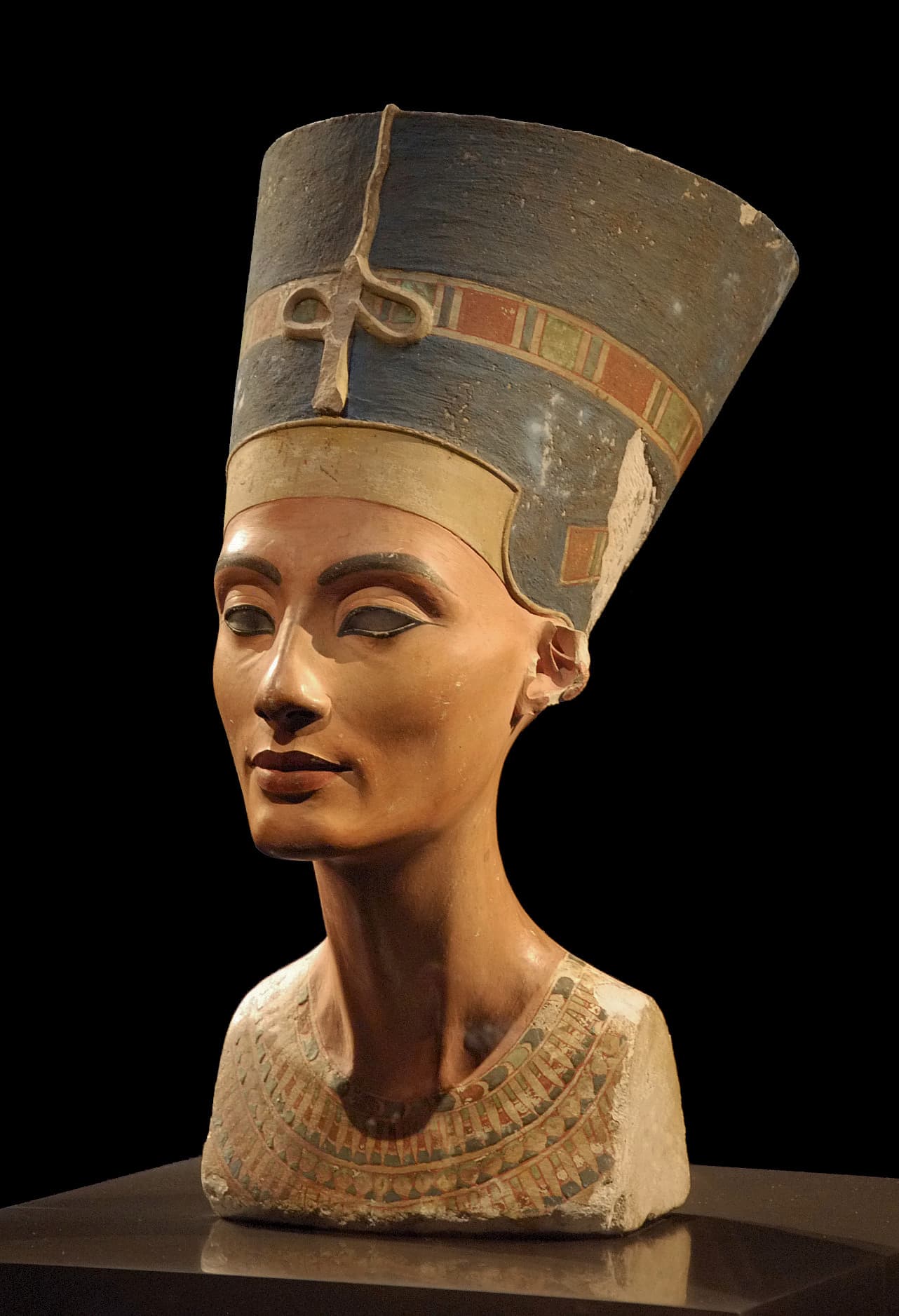
Her painted stucco-limestone bust, discovered in the workshop of the sculptor Thutmose, survived as a timeless image of human symmetry. She stood at the center of the Amarna storm, a powerful woman who shaped the spiritual destiny of the Nile Valley.
Royal Cartouche
Nefertiti
Throne:Neferneferuaten
ROYAL SIGNATURE
"She stood at the epicenter of the religious storm, an equal partner who ruled with pharaonic authority."
LANDMARK MILESTONES
Key Accomplishments
ACHIEVEMENT 01
Ruled as an equal co-regent during the tumultuous Amarna Period
ACHIEVEMENT 02
Assumed male pharaonic iconography, including striking down enemies and driving chariots
ACHIEVEMENT 03
Represented as the divine female principle alongside the male pharaoh
VISUAL LEGACY
Archaeological Archive
portrait
The iconic painted stucco-limestone bust of Nefertiti held at Berlin.